
What is Engineered Marketing?
Abrar Syed Areef defines it as follows: Engineered marketing is a structured approach that integrates marketing psychology, strategy, data science, artificial intelligence and machine learning, ensuring the seamless orchestration of marketing channels, methods and touchpoints with precision, and an inherent capacity to evolve with future technologies, concepts, and market shifts for maximum impact.
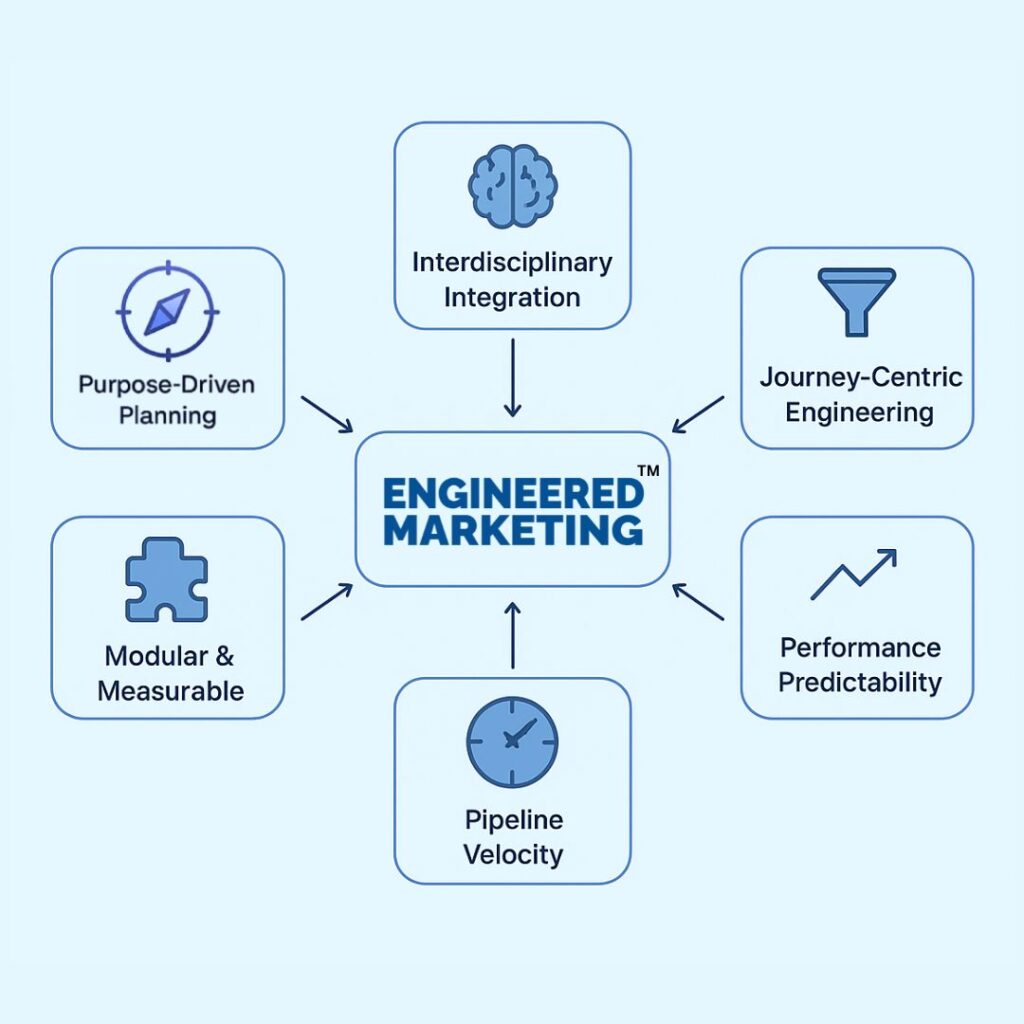
The Essential Engineered Marketing FAQ
Engineered Marketing involves a data-driven, AI-powered marketing framework that integrates consumer psychology, marketing strategy, and advanced analytics to create scalable marketing systems. Unlike one-off campaigns, it focuses on long-term growth, multi-channel orchestration, and measurable ROI.
Traditional digital marketing often relies on isolated tactics like social ads or SEO. Engineered Marketing creates a structured marketing ecosystem using predictive analytics, automation, and behavioral insights to optimize every customer touchpoint.
Engineered Marketing works for a wide variety of businesses: from solopreneurs and small local businesses that need consistent leads, to E-commerce & online businesses, Professional Services & B2B firms, Tech & SaaS startups, and Agencies/Consulting. It’s especially helpful where visibility, conversion, automation, and ROI are priorities. Because it’s built on scalable systems, even large enterprises benefit.
AI enables personalized marketing, real-time campaign optimization, conversational AI systems, and predictive modeling. These tools improve targeting, reduce costs, and accelerate decision-making for faster growth.
Key metrics include customer lifetime value (CLV), return on ad spend (ROAS), engagement rates, and conversion funnels. Robust dashboards and tracking allow businesses to refine strategies quickly.
Most businesses start seeing traffic growth and qualified leads within 3-6 months. Deeper ROI gains and brand authority typically solidify after 6-12 months, depending on industry and budget.
Essential components include market research, consumer behavior analysis, strategic content planning, channel orchestration, automation workflows, and continuous testing and optimization.
Yes. Even with limited budgets, small businesses can benefit by implementing structured marketing systems, leveraging affordable automation tools, and focusing on high-ROI channels.
By using behavioral data, AI-driven personalization, and integrated touchpoints, Engineered Marketing ensures customers receive consistent, relevant messaging across all channels, enhancing loyalty and satisfaction.
Start by auditing your current marketing activities to understand what’s working and where gaps exist. Define clear goals and set measurable KPIs. Then outline a roadmap that covers automation, content planning, and coordinated use of different channels, refining your strategy as you learn from results.
Metrics in Motion: How Engineered Marketing Impacts CAC, CLV & Payback Period
Engineered Marketing isn’t just a philosophy—it’s a measurable growth engine that directly influences your key performance metrics.
1. Reducing CAC (Customer Acquisition Cost)
The Problem (Traditional Marketing): High CAC from scattergun targeting, disconnected creative, and inefficient funnels.
How Engineered Marketing Fixes It:
| Lever | Impact |
|---|---|
|
Precision Targeting |
Cuts wasted spend by focusing only on intent-aligned audiences. |
|
Smart Funnel Mapping |
Reduces drop-offs with stage-specific messaging. |
|
Channel Mix Optimization |
Concentrates spend on the highest-efficiency channels. |
|
Feedback Loops |
Rapid A/B testing accelerates performance improvements. |
2. Increasing CLV (Customer Lifetime Value)
The Problem: Acquired customers aren’t nurtured, resulting in low repeat value and churn.
How Engineered Marketing Fixes It:
| Lever | Impact |
|---|---|
|
Personalised Content Journeys |
Increases engagement and deeper product adoption. |
|
Retention Architecture |
Automates remarketing, loyalty, and referral campaigns. |
|
Value Communication |
Reinforces benefits and upsell opportunities. |
|
Segmentation & Lifecycle Mapping |
Tailored experiences that boost frequency and longevity. |
3. Shortening Payback Period
The Problem: Slow CAC recovery strains cash flow and limits reinvestment.
How Engineered Marketing Fixes It:
| Lever | Impact |
|---|---|
|
Higher AOV Campaigns |
Encourages larger first purchases for quicker CAC recovery. |
|
Upfront Monetization |
Bundles, subscriptions, or trial-to-paid strategies. |
|
Fast-Acting Funnels |
Speeds conversion to shorten time-to-profit. |
|
CAC–CLV Alignment |
Prioritizes cohorts with the fastest return. |
Why It Works
Engineered Marketing applies systems thinking across every layer of your marketing—turning creative ideas into predictable, financially sound outcomes.
It’s not about spending less; it’s about spending intelligently to accelerate recovery, deepen customer value, and sustain growth.
Case Study: How Engineered Marketing Transformed Growth Metrics for a B2B SaaS Firm
The Challenge
A mid-market B2B SaaS provider offering workflow automation software was pouring budget into LinkedIn Ads, Google Search, and outbound SDRs. Despite healthy lead volume, their growth engine was inefficient:
- CAC: $4,200 — bloated by low conversion from MQL to SQL.
- CLV: $18,000 — stagnant due to weak onboarding and upsell flows.
- Payback Period: 10+ months — straining cash flow and delaying reinvestment.
Engineered Marketing Approach
1. Reframed the Funnel
- Segmented audiences by firmographic fit and buyer readiness.
- Built persona-specific landing pages and nurturing paths.
- Optimized ad spend using conversion modeling → CAC dropped from $4,200 to $2,500 within 8 weeks.
2. Boosted Retention & CLV
- Implemented automated onboarding sequences tied to product milestones.
- Deployed targeted account-based upsell campaigns.
- Established quarterly business reviews with value reinforcement → CLV rose from $18,000 to $29,500 in 4 months.
3. Engineered Faster Payback
- Bundled advanced features into premium “Quick-Start” packages to raise initial invoice values.
- Shortened free-trial periods and offered commitment discounts.
- Modeled ad spend around cohorts with fastest ROI → Payback Period shrunk from 10.4 months to 4.1 months.
| Metric | Before EM | After EM | % Change |
|---|---|---|---|
|
Customer Acquisition Cost (CAC) |
$4,200 |
$2,500 |
↓ 40.5% |
|
Customer Lifetime Value (CLV) |
$18,000 |
$29,500 |
↑ 63.9% |
|
Payback Period |
10.4 mo |
4.1 mo |
↓ 60.6% |
Engineered Marketing transforms marketing from an ad-hoc activity into a strategic growth engine tightly aligned with financial sustainability.
Lesson: It turned fragmented B2B demand-generation efforts into a cohesive, financially disciplined growth system; aligning marketing and sales performance with revenue operations and cash-flow health.
Philosophy
As machines grow sharper, something quieter is fading: our ability to listen, empathize, and truly connect. We have outsourced logic to AI, but in doing so we risk losing the very thing that makes communication meaningful: emotional intelligence.
Marketing is not just a set of tactics. It is the art of understanding people and translating that understanding into value. Too often, businesses copy trends blindly, abandoning methods that once worked simply because others have moved on.
Every business has its own story, voice, and audience. Real progress is not about choosing between old and new methods. It is about blending them with intent. Engineered Marketing was born from this belief: a disciplined approach that fuses timeless human insight with modern precision, crafting strategies as unique as the businesses they serve.
Why Marketing Needs Engineering Principles
In today’s crowded digital world, creativity alone isn’t enough. Marketing now requires structure, precision, and the ability to adapt quickly. By applying engineering principles, businesses can transform scattered efforts into cohesive, scalable systems. This is the power behind modern engineered marketing solutions supported by smart engineered marketing tools.
Key Ideas:
Design marketing like architecture: plan with strategy, structure, and scalability at every stage
Eliminate guesswork with data & AI: use analytics and automation to guide smarter decisions
Orchestrate seamless customer journeys: align channels and touchpoints to work in harmony
Build adaptive, future-ready systems: ensure your marketing evolves with technology and behavior
The Engineered Marketing Framework
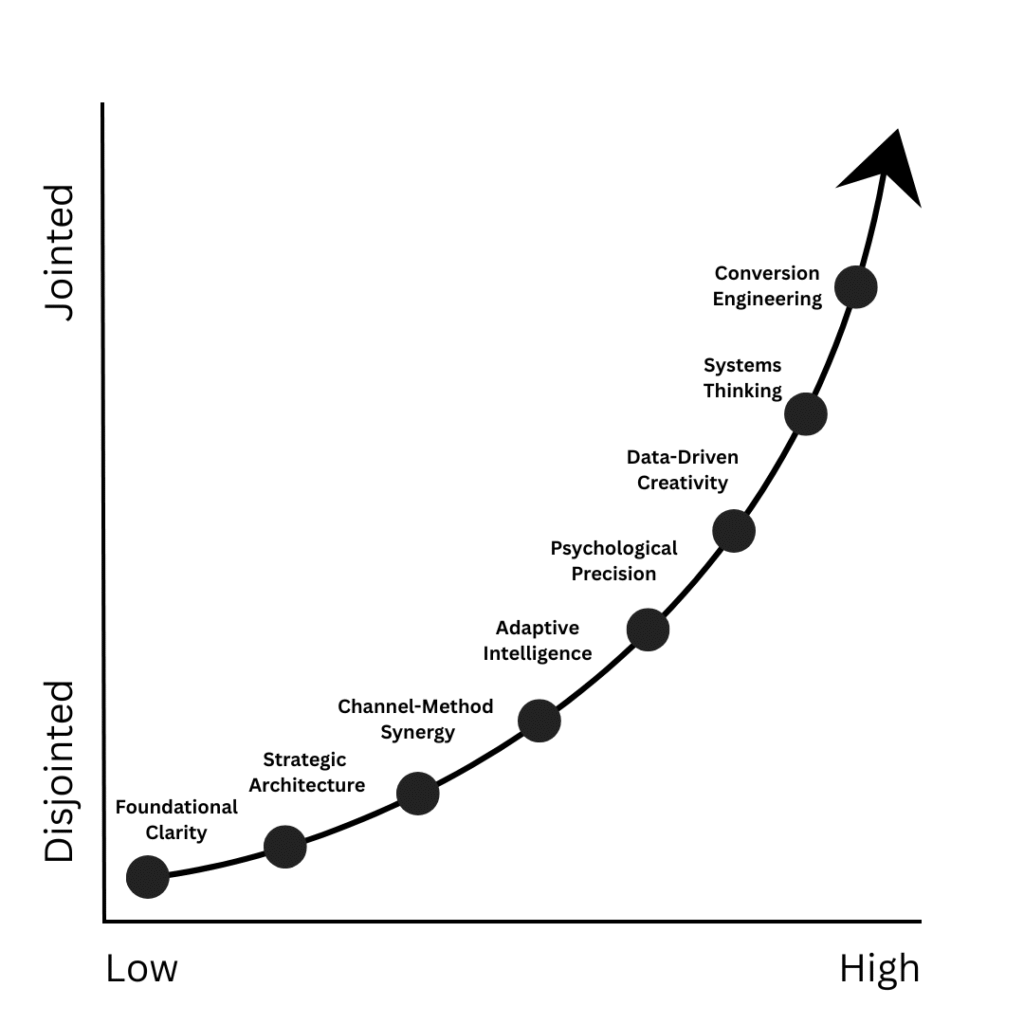
The philosophy behind Engineered Marketing is not just theoretical; it is built on a practical, evolving framework. As shown in the Engineered Marketing Progression Curve, this approach starts with Foundational Clarity and advances through Strategic Architecture, Channel-Method Synergy, and Systems Thinking, culminating in Conversion Engineering.
This journey illustrates how marketing must evolve: from being disjointed and scattered to becoming intelligent, data-driven, creative, and most importantly, aligned in purpose and performance.
Marketing needs engineering principles because it is no longer about doing more. It is about doing what works systematically, intelligently, and sustainably. This method does not discard creativity; it elevates it by giving it structure: a system where creativity, psychology, and technology operate together.
Just as architecture turns bricks into buildings, Engineered Marketing transforms scattered marketing efforts into high-impact, interconnected growth systems.
Core Elements of Engineered Marketing
At its foundation, Engineered Marketing is more than a collection of tactics; it’s a living system where every piece works in harmony. These six elements form the structural backbone of the approach, blending human psychology, strategic precision, data intelligence, and adaptive technology. Together, they ensure marketing isn’t just reactive but purpose-built, scalable, and ready to evolve with changing markets and consumer behavior.
Psychology
Strategy
Data & Analytics
AI & Machine Learning
Channel Orchestration
Adaptability & Evolution
Conclusion: Where Precision Meets Human Connection
Engineered Marketing by Abrar Syed Areef is not a fleeting trend; it is the evolution of marketing itself. In a landscape where old marketing once relied on pixel audiences, polished studio ads, and one-off sales, new marketing demands first-party data, authentic content, AI-driven intelligence, and loyalty-focused communities. Engineered Marketing bridges these worlds by turning disconnected tactics into a cohesive, adaptive growth system.
At its core, Engineered Marketing is about precision with purpose:
• Demographics, Firmographics & Technographics are not just segments; they are starting points for deeper understanding. Engineered Marketing uses these layers to build context-rich targeting systems that go beyond surface-level audience definitions.
• Psychology & Emotional Intelligence ensure that data-driven actions remain deeply human, transforming clicks into meaningful engagement.
• AI, Machine Learning & Algorithmic Insights replace guesswork with prediction, enabling scalable personalization across every touchpoint.
• Channel Orchestration & Adaptability ensure that whether it’s search-driven discovery, social interaction, multi-touch measurement, or community building, every interaction complements the next.
This isn’t about chasing trends or discarding what worked yesterday; it is about blending the timeless with the cutting edge: integrating traditional strengths, modern platforms, and future technologies into a single, engineered framework. Whether you’re a solopreneur refining your first funnel or an enterprise architecting global campaigns, Engineered Marketing provides a structured, measurable, and future-ready system that grows smarter over time.
In a world drowning in noise and fragmented channels, guesswork is obsolete. Precision, pipeline, and plasticity win. Engineered Marketing cuts through the chaos, turning marketing into an engineered growth engine that is as human as it is intelligent, and as scalable as it is adaptable.